Summarize this article with:
- Each AI provider has strengths and weaknesses depending on the task, whether it’s text generation, image analysis, or speech recognition.
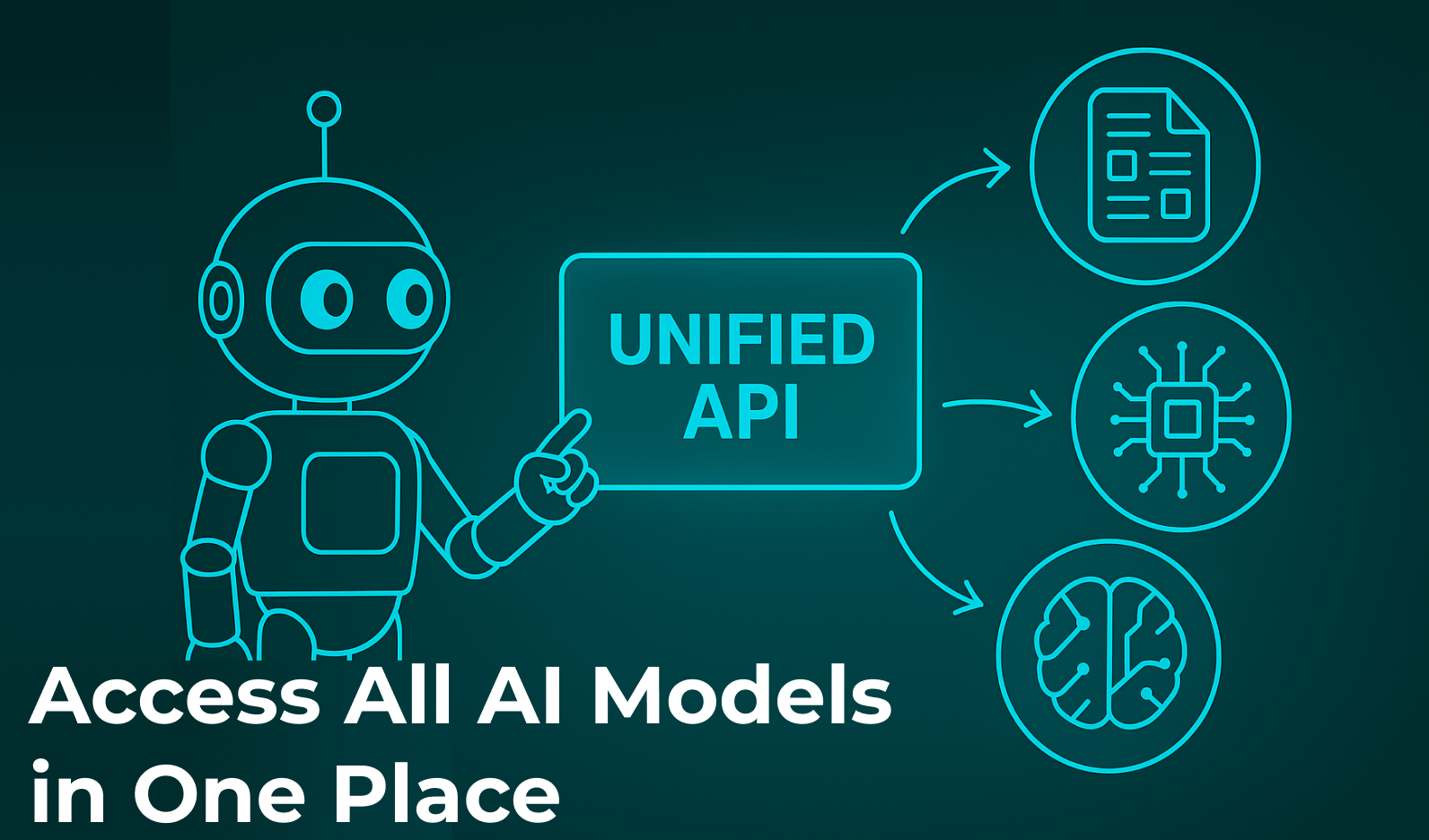
- Unified API Solutions: Use an API aggregator that connects to multiple AI providers under one endpoint.
- Eden AI provides developers and product builders with a single API that connects to dozens of AI providers across text, vision, audio, and translation categories.
- Accessing multiple AI models in one place allows developers to build smarter, more resilient, and cost-efficient AI-powered applications.
- Eden AI stands out as the best solution for multi-model orchestration, giving you the freedom to integrate, compare, and automate access to the world’s leading AI technologies, all through a single,...
Why You Need Access to Multiple AI Models
Each AI provider has strengths and weaknesses depending on the task, whether it’s text generation, image analysis, or speech recognition. Relying on a single provider can lead to:
- Performance inconsistency: Some models perform better on specific use cases or languages.
- Cost fluctuations: Pricing varies significantly between vendors.
- Vendor lock-in risks: Switching providers can require major code changes.
Having access to multiple AI models enables you to choose the most efficient and cost-effective model dynamically, ensuring scalability and resilience.
The Challenges of Managing Multiple AI Providers
Integrating different AI APIs usually means handling multiple authentication systems, formats, rate limits, and pricing structures.
Typical issues include:
- Complex API integrations
- Non-standardized input/output formats
- Lack of global monitoring or cost tracking
- Time-consuming maintenance when providers update their endpoints
For developers, this means less time building core features and more time managing infrastructure.
How to Centralize Access to AI Models
There are two main approaches to multi-model access:
- Manual Integration:
Build custom adapters for each provider (e.g., OpenAI, Google, AWS, Anthropic).- Pros: Full control over implementation.
- Cons: Heavy maintenance, poor scalability.
- Unified API Solutions:
Use an API aggregator that connects to multiple AI providers under one endpoint.- Pros: Single API key, standardized outputs, simplified cost tracking.
- Cons: Limited if the platform doesn’t support your required feature.
For most teams, the second option drastically reduces complexity and accelerates deployment.
Multi-Model Orchestration and Routing
Beyond access, true efficiency comes from model orchestration, automatically selecting the best model based on performance, language, or price.
Advanced systems allow you to:
- Run A/B tests between models.
- Implement fallback logic when a model fails.
- Route requests dynamically to the best-performing model.
This orchestration layer ensures optimal accuracy and reliability without manual intervention.
How Eden AI Simplifies Multi-Model Access
Eden AI provides developers and product builders with a single API that connects to dozens of AI providers across text, vision, audio, and translation categories.
With Eden AI, you can:
- Access and compare models from OpenAI, Google, AWS, Anthropic, Stability, and more.
- Use a standardized API format across all AI tasks.
- Monitor usage and costs in real time.
- Orchestrate models dynamically through workflow tools or simple routing logic.
This unified approach eliminates vendor lock-in, optimizes cost-performance balance, and accelerates product development.
Conclusion
Accessing multiple AI models in one place allows developers to build smarter, more resilient, and cost-efficient AI-powered applications. Rather than managing several APIs manually, using a unified platform ensures speed, flexibility, and long-term scalability.
Eden AI stands out as the best solution for multi-model orchestration, giving you the freedom to integrate, compare, and automate access to the world’s leading AI technologies, all through a single, developer-friendly API.

.jpg)
![[AUTO-DRAFT] OpenAI Quietly Cut Codex Context Window by 27 Percent: Why Provider-Specific Limits Are Not a Contract](https://cdn.prod.website-files.com/61e7d259b7746e3f63f0b6be/6a74828e12326e8199f45718_6a74828c58976902eb769454_openai-quietly-cut-codex-context-window-by-27-percent-why-provider-specific--openai.png)