Summarize this article with:
- The gateway sees every prompt before any model provider does.
- Its main strength is guardrails.
- Kong also benefits from its broader enterprise API management stack, including mature access control and traffic governance.
- Key criteria include task-specific accuracy, pricing per request, supported languages, API latency, and ease of integration.
- Eden AI provides a unified REST API connecting to all major GDPR-Compliant AI Gateways providers, allowing integration with a single API key and a standardized JSON response format regardless of...
AI gateways sit between your application and every model your users call. That makes them a high-risk layer for GDPR compliance. Every prompt passes through the gateway. Those prompts often contain personal data: names, emails, customer records, support tickets, health information, financial details, or internal documents.
In Europe, the pressure increases in August 2026, when the EU AI Act starts adding stricter operational requirements, including audit logging, on top of GDPR obligations.
But not every “GDPR-compliant” AI gateway applies the same standards. Some offer a DPA and basic data controls, while still routing inference through US infrastructure or providers that may not fit your compliance requirements.
This article compares the best GDPR-compliant AI gateway options in 2026, with a focus on data residency, provider routing, auditability, and production readiness.
What Is a GDPR-Compliant AI Gateway?
An AI gateway is a unified routing layer between your application and AI model providers. Instead of integrating separately with OpenAI, Anthropic, Google, Mistral, AWS, or Azure, your app sends requests to the gateway, which handles model routing, load balancing, fallback logic, logging, and policy enforcement from one place.
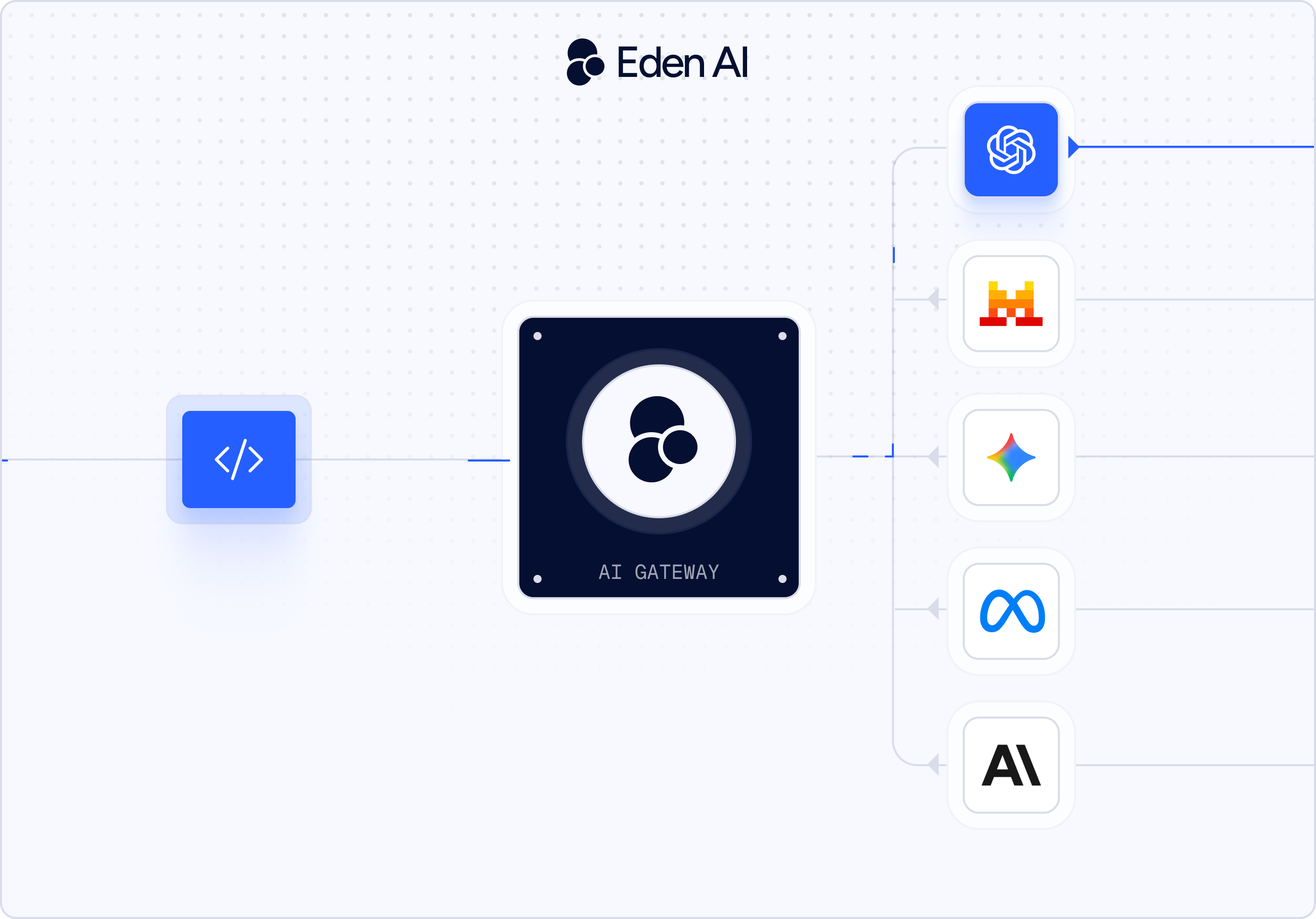
A GDPR-compliant AI gateway goes further. It controls how personal data moves through the full AI request path, not only where data is stored. For GDPR-sensitive workloads, the gateway must be able to define:
- Where requests are routed
- Where inference actually runs
- What data is logged
- How long logs are retained
- Whether PII is redacted before reaching the model
- Whether processing terms are documented in a DPA
The key point is that EU data storage is not enough. A gateway can store logs in Europe while still sending prompts to models running on US infrastructure. For many European companies, that creates a compliance gap, because the prompt itself may contain personal data before it ever reaches storage.
A true GDPR-compliant AI gateway should support EU data residency across the full request path: routing, inference, and logging. It should also give teams enough control to restrict traffic to GDPR-compliant providers only, apply retention rules, and prove how data was processed during audits.
Under Article 28 GDPR, any processor handling personal data must be covered by a Data Processing Agreement. In this setup, the gateway provider is a processor, so a DPA is not optional.
Why the Gateway Layer Is Your Biggest GDPR Risk
Every prompt is potential personal data
The gateway sees every prompt before any model provider does. In production, prompts often include names, email addresses, support tickets, medical details, financial data, contracts, or internal documents. Under GDPR, this is personal data processing.
If the AI gateway processes that data without a lawful basis, minimization controls, retention rules, and processor safeguards, the violation happens at the gateway layer, regardless of how compliant the downstream model provider is.
The CLOUD Act conflict
For EU companies, jurisdiction matters as much as hosting location. A US-incorporated AI gateway may be subject to lawful US government data demands, including for data stored outside the United States.
GDPR Article 48 says transfers or disclosures required by a third-country court or authority are only enforceable when based on an international agreement, such as an MLAT. That creates a legal conflict: EU-hosted data can still be exposed to US jurisdiction. Using a US-incorporated gateway for EU personal data is therefore a legal risk, not just an infrastructure choice.
GDPR Articles 5, 28, 30, and 44
At the gateway level, GDPR obligations are concrete:
- Article 5: apply data minimization, so the gateway only processes what is necessary.
- Article 28: sign a DPA with every processor handling personal data, including the gateway provider.
- Article 30: maintain records of processing activities, including what data is routed, where, why, and under which safeguards.
- Article 44: prevent transfers of personal data to non-adequate countries unless appropriate safeguards are in place.
These are not abstract legal requirements. They determine how the gateway routes prompts, stores logs, handles retention, and documents processing.
The EU AI Act stacks on top - August 2026 deadline
The EU AI Act adds another layer. From August 2026, the main high-risk AI system obligations start applying, and Article 12 requires high-risk AI systems to support automatic event logging over their lifecycle.
Penalties can reach €35 million or 7% of global annual turnover for the most serious infringements, which is higher than GDPR’s 4% cap. The gateway is the natural enforcement point for these requirements because it already controls routing, logs, access policies, and provider selection.
Best GDPR-Compliant AI Gateways in 2026
Eden AI - Best for European Teams Needing Native GDPR Compliance
Verdict: Eden AI is the strongest choice for European teams that need a GDPR-compliant AI gateway without adding compliance ambiguity to their AI stack.
Eden AI is headquartered in France and runs on EU infrastructure by default. It gives developers access to 50+ AI providers through one API, while keeping routing, governance, and compliance controls in one place.
Its key advantage is the ability to filter routing to GDPR-compliant providers only. This helps teams prevent prompts from being sent to providers or regions that do not match their legal requirements.
Eden AI also includes a DPA as standard, does not use customer data for training, and supports EU data residency by default.
Best for: European companies, fintech, healthcare, legal, and teams that cannot afford uncertainty around data routing.
TrueFoundry - Best for Enterprise VPC Deployments
Verdict: TrueFoundry is best for enterprises that want gateway control inside their own EU cloud environment.
TrueFoundry supports regional VPC deployment. This means inference, logs, and routing can stay inside the customer’s own cloud environment in the EU.
That setup is valuable for large companies where security teams require direct control over network boundaries, access rules, and data flows.
Its strengths are VPC deployment, audit logging, and RBAC. The tradeoff is implementation complexity: it usually requires more cloud, security, and platform engineering work than a hosted gateway.
Best for: Large enterprises with strict data sovereignty requirements that need managed control inside their own VPC.
Portkey - Best for Teams Needing Guardrails and PII Redaction
Verdict: Portkey is a good fit for teams that need guardrails, observability, and PII protection, but EU routing must be checked carefully.
Portkey focuses on AI gateway observability, reliability, and policy enforcement. It supports compliance frameworks including SOC 2, HIPAA, GDPR, and CCPA.
Its main strength is guardrails. Portkey offers 40+ pre-built guardrails, including PII detection and redaction, which helps reduce the risk of sending sensitive data to model providers.
The limitation is EU residency. Inference may route outside the EU depending on the selected model and provider, so teams with strict GDPR constraints should validate routing behavior before production.
Best for: Teams building customer-facing AI features that need guardrails, PII redaction, and observability alongside compliance controls.
Requesty - Best for EU-Locked Inference Routing
Verdict: Requesty is a strong option for teams that need inference and failover to stay inside the EU.
Requesty offers a dedicated EU endpoint for EU-only model inference. Its main strength is EU failover: when one provider is unavailable, requests are routed to another EU-compatible option instead of falling back to non-EU infrastructure.
It also covers key enterprise requirements such as SOC 2 Type II, a DPA, zero data retention, and per-request audit logging.
Requesty is useful for teams that want EU inference guarantees without running their own gateway infrastructure.
Best for: Developer teams that need guaranteed EU inference without managing self-hosted infrastructure.
Kong AI Gateway - Best for On-Premises Data Sovereignty
Verdict: Kong AI Gateway is best when full infrastructure control matters more than fast SaaS onboarding.
Kong AI Gateway can be self-hosted on EU infrastructure. This gives organizations control over routing, inference paths, access policies, and logging.
For highly regulated sectors, this can be the safest architecture because data does not need to pass through a third-party hosted gateway.
Kong also benefits from its broader enterprise API management stack, including mature access control and traffic governance. The tradeoff is operational ownership: your team must manage deployment, monitoring, upgrades, security, and provider configuration.
Best for: Organizations in highly regulated sectors that require full on-premises or EU-controlled deployment.
What to Look For in a GDPR-Compliant AI Gateway
EU data residency across the full request path
EU data residency must cover the full request path, not only stored logs or account data. Ask vendors where routing happens, where inference runs, and where logs are stored. If prompts are processed on US servers during inference, the gateway is not truly EU-resident for production GDPR workloads.
GDPR-only provider routing
A GDPR-compliant AI gateway should let you restrict which model providers can receive requests. This means filtering out providers that do not meet your compliance requirements or cannot process data within EU infrastructure. Most gateways route to a broad provider list by default, so this control should be explicit, configurable, and enforceable.
PII detection and redaction
The gateway should detect and redact personal data before prompts reach any model. This includes names, emails, phone numbers, IBANs, health data, customer identifiers, and other sensitive fields. Redaction policies should be configurable by use case, because a support chatbot, medical workflow, and HR automation will not have the same risk profile.
Per-request audit logs
Audit logs should record every request in enough detail to support compliance reviews and incident investigations. At minimum, you need to know what was sent, which model received it, when it happened, which user or system triggered it, and under which policy or legal basis it was processed. This supports GDPR Article 30 records of processing and EU AI Act Article 12 event logging for high-risk AI systems.
Data Processing Agreement included as standard
The gateway provider is a data processor under GDPR Article 28 when it handles personal data on your behalf. A signed Data Processing Agreement should be included by default, not locked behind an enterprise plan or manual negotiation. Without it, you should not send EU personal data through the gateway in production.
Zero data retention
Zero data retention means prompt and response data is not stored after the request is delivered. Do not rely only on website copy. Ask for the retention policy in writing, including whether logs contain prompt content, metadata only, or redacted payloads.
EU-only failover
Failover must respect the same compliance rules as normal routing. If an EU model provider is unavailable, the gateway should route only to another approved EU-based provider. Silent fallback to a US-hosted model may improve uptime, but it can break your GDPR controls exactly when your system is under pressure.
5 GDPR Mistakes Companies Make When Using an AI Gateway
1. Treating “GDPR-compliant” as a vendor label rather than a technical guarantee
Many gateways list GDPR compliance as a feature, but do not explain what it actually covers. The key question is whether compliance applies to the full request path: inference, logging, and storage. Teams should also check which GDPR articles are covered in the vendor’s DPA, not just whether a DPA exists.
2. Using a US-incorporated gateway for EU personal data
A US-incorporated gateway can be subject to the CLOUD Act, regardless of where its servers are located. That means EU personal data routed through the gateway may be exposed to compelled disclosure requests from US authorities. For European companies, this creates a legal risk under GDPR Article 48, which restricts disclosure to foreign authorities unless an international legal basis applies.
3. Routing to non-GDPR-approved AI providers
Most AI gateways provide access to a broad provider catalog by default. Without explicit provider filtering, prompts containing EU personal data may be routed to vendors that do not offer GDPR-adequate processing terms or EU infrastructure. GDPR Article 44 applies to every transfer in the chain, not only to the gateway itself.
4. Logging full prompts without data minimization
Request logs are useful for debugging, analytics, monitoring, and incident response. But storing raw prompts can also mean storing names, emails, health details, financial data, or customer records for longer than necessary. Without PII redaction, retention limits, and a documented legal basis, full-prompt logging can violate GDPR Article 5’s data minimization principle.
5. Going live without a signed DPA
The gateway provider is a processor when it handles personal data on behalf of your company. GDPR Article 28 requires a signed Data Processing Agreement with every processor before personal data is processed. Operating without one, even during a pilot or temporary production rollout, is a compliance gap regardless of how strong the technical architecture looks.
Conclusion
Choosing a GDPR-compliant AI gateway is not only about connecting to multiple model providers. It is about controlling where prompts go, where inference runs, what gets logged, how long data is retained, and which processors are allowed to handle EU personal data.
For European teams, this makes the gateway layer a compliance-critical decision. A provider that stores logs in the EU but routes prompts through non-EU infrastructure can still create GDPR exposure. A provider without GDPR-only routing can silently send sensitive data to model providers that do not match your legal requirements.
Eden AI is the best fit for teams that want GDPR compliance built into the gateway layer from the start. With EU data residency by default, a DPA included as standard, no customer data used for training, and the ability to filter routing to GDPR-compliant providers only, Eden AI gives developers and compliance teams a cleaner path to production.
Start building with Eden AI today and use it as your GDPR-compliant AI gateway for secure, compliant access to leading AI models through one API.

.jpg)