Summarize this article with:
- The rise of AI and Large Language Models (LLMs) has unlocked powerful opportunities for businesses.
- Text classification might only need a lightweight NLP model.
- Imagine an AI system that automatically picks the cheapest provider meeting your quality criteria.
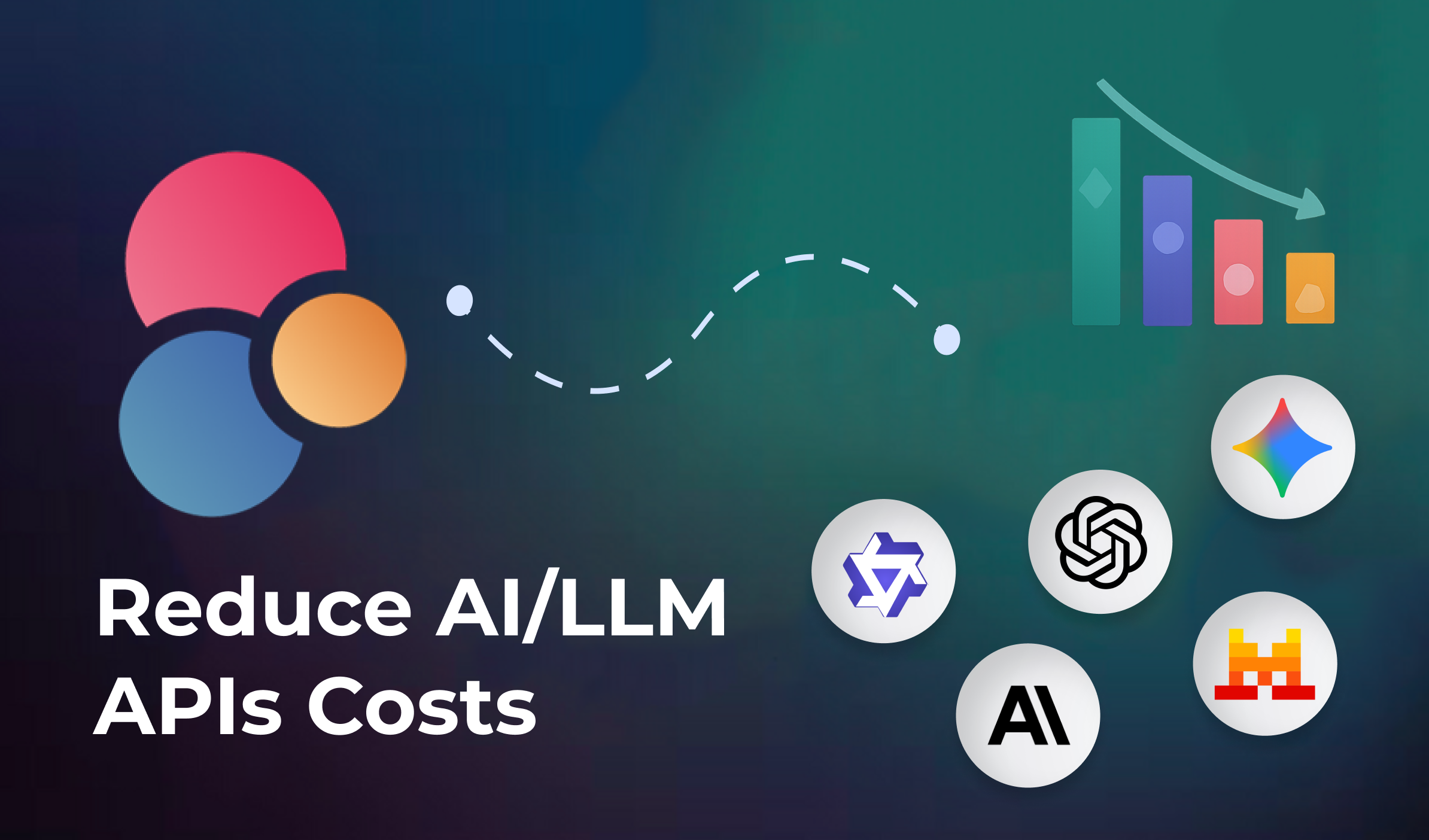
- Reducing AI and LLM API costs doesn’t have to mean sacrificing quality.
- The key is to stay flexible, don’t lock yourself into one provider or one pricing model.
How to Reduce AI and LLM API Costs Without Compromising Performance?
The rise of AI and Large Language Models (LLMs) has unlocked powerful opportunities for businesses. However, as usage scales, API costs can grow quickly, sometimes unpredictably. Whether you’re a startup experimenting with AI or an enterprise running production workloads, cost control is essential for long-term sustainability.
So, how can you keep your AI expenses under control without sacrificing quality or performance? Here are some proven strategies.
1. Choose the Right Model for the Right Task
Not every use case requires the most expensive model. For example:
- Text classification might only need a lightweight NLP model.
- Summarization could be done with mid-range models instead of the largest LLMs.
The key is model selection: choosing the most cost-effective API for your specific needs.
Tip: Platforms like Eden AI make this easier by providing access to multiple AI providers through a single API, letting you compare performance and pricing instantly.
2. Implement Usage Monitoring and Cost Alerts
Costs often escalate because teams lack visibility into API usage. Setting up dashboards and alerts helps you:
- Track token consumption for LLMs.
- Detect unexpected spikes in usage.
- Plan budgets based on historical data.
Some tools even let you set usage limits per project, ensuring you stay within budget.
3. Cache Repeated Requests
If your application frequently calls the same API for identical inputs, caching responses can drastically reduce API calls—and costs.
- Store responses locally for recurring queries.
- Use versioning to ensure results stay updated.
This simple change can lead to immediate cost savings.
4. Explore Multi-Provider Pricing
AI API providers often have different pricing structures. The same task could cost 2–3x more on one provider than another.
Using a multi-provider approach gives you:
- Access to competitive pricing.
- The option to switch providers if costs rise.
- A safety net if one API becomes unavailable.
Eden AI, for example, lets you route requests to multiple providers automatically, optimizing for both cost and performance.
5. Optimize Prompts and Token Usage for LLMs
For Large Language Models like GPT or Claude, prompt length directly impacts cost since you pay per token.
- Write shorter, more precise prompts.
- Summarize context instead of sending full documents.
- Use fine-tuning or embeddings for recurring tasks to reduce tokens.
Over time, these adjustments can cut costs significantly.
6. Automate Provider Selection Based on Cost
Imagine an AI system that automatically picks the cheapest provider meeting your quality criteria. This isn’t a distant dream, tools like Eden AI already offer automatic provider routing based on your settings, so you never overpay for API calls.
Conclusion
Reducing AI and LLM API costs doesn’t have to mean sacrificing quality. By choosing the right models, monitoring usage, caching requests, and leveraging multi-provider platforms like Eden AI, you can optimize both expenses and performance.
The key is to stay flexible, don’t lock yourself into one provider or one pricing model. With the right strategy, you can make AI adoption both powerful and cost-efficient.

.jpg)
![[AUTO-DRAFT] OpenAI Quietly Cut Codex Context Window by 27 Percent: Why Provider-Specific Limits Are Not a Contract](https://cdn.prod.website-files.com/61e7d259b7746e3f63f0b6be/6a74828e12326e8199f45718_6a74828c58976902eb769454_openai-quietly-cut-codex-context-window-by-27-percent-why-provider-specific--openai.png)