.png)
Summarize this article with:
- OpenRouter is strong for broad LLM access, but not ideal for strict EU data residency because default routing can involve US-based infrastructure and EU in-region routing is mainly enterprise-controlled.
- Eden AI is the best overall option for most European teams because it combines an EU endpoint, DPA availability, 500+ models, and access to both LLMs and expert AI models through one API.
- EUrouter and Cortecs are the clearest choices for end-to-end EU routing when the priority is keeping AI traffic inside European infrastructure by default.
- Requesty is strongest for cost and performance optimization, but teams should verify which models are actually processed in EU regions before using it for sensitive workloads.
- The best choice depends on the workload: use Eden AI for broad AI coverage, EUrouter for pure EU LLM routing, Orq.AI for LLMOps, Requesty for cost optimization, and Cortecs for sovereign enterprise deployments.
GDPR enforcement is getting stricter, the EU AI Act is adding new pressure, and US-hosted AI gateways can create data residency exposure for European teams handling sensitive prompts, logs, or customer data.
OpenRouter is a strong product for routing across many models, testing providers, and keeping LLM infrastructure flexible. But it is not the right fit for companies that require EU data residency, stricter regional controls, or a procurement process built around European compliance.
This guide compares five OpenRouter alternatives for Europe: Eden AI, EUrouter, Orq.AI, Requesty, and Cortecs. It looks at their EU credentials, model support, pricing, and best-fit use cases so technical teams can choose the right gateway with fewer assumptions.
Why European teams need a different AI gateway
OpenRouter is useful for developers who want one routing layer for many LLM providers. It makes model switching, fallback logic, and usage tracking easier.
But for European teams, routing flexibility is not enough.
Compliance teams need to know where prompts, outputs, logs, and account data are processed and stored. If this data is handled in the US, or if the data processing agreement does not clearly cover the full chain of providers, the setup can create GDPR transfer risks for personal data.
The EU AI Act also raises the bar. Companies using third-party AI APIs need visibility into who operates the system, where data flows, which models are used, and whether the use case creates transparency, governance, or high-risk obligations.
That is why EU data residency should not be reduced to a European billing address. It means customer data is processed on EU infrastructure, stays within EU borders where required, and is covered by a DPA that matches the real processing chain.
For European teams, the best AI gateway is not only the one with the most models. It is the one that gives developers flexibility while giving legal, security, and compliance teams enough control to approve production use.
Top 5 European OpenRouter alternatives reviewed (2026 Updated)
The best OpenRouter alternatives in Europe are Eden AI, EUrouter, Orq.AI, Requesty and Cortecs. We give you in-depth analysis below including their strengths, supported AI models, key features, and pricing, to provide an overview.
1. Eden AI - Best overall European AI gateway
Eden AI is a European AI gateway that lets developers access LLMs and other AI models through one API. It is designed for teams that want to test, compare, and route between providers without managing separate integrations for each model. See the full Eden AI vs OpenRouter breakdown here.
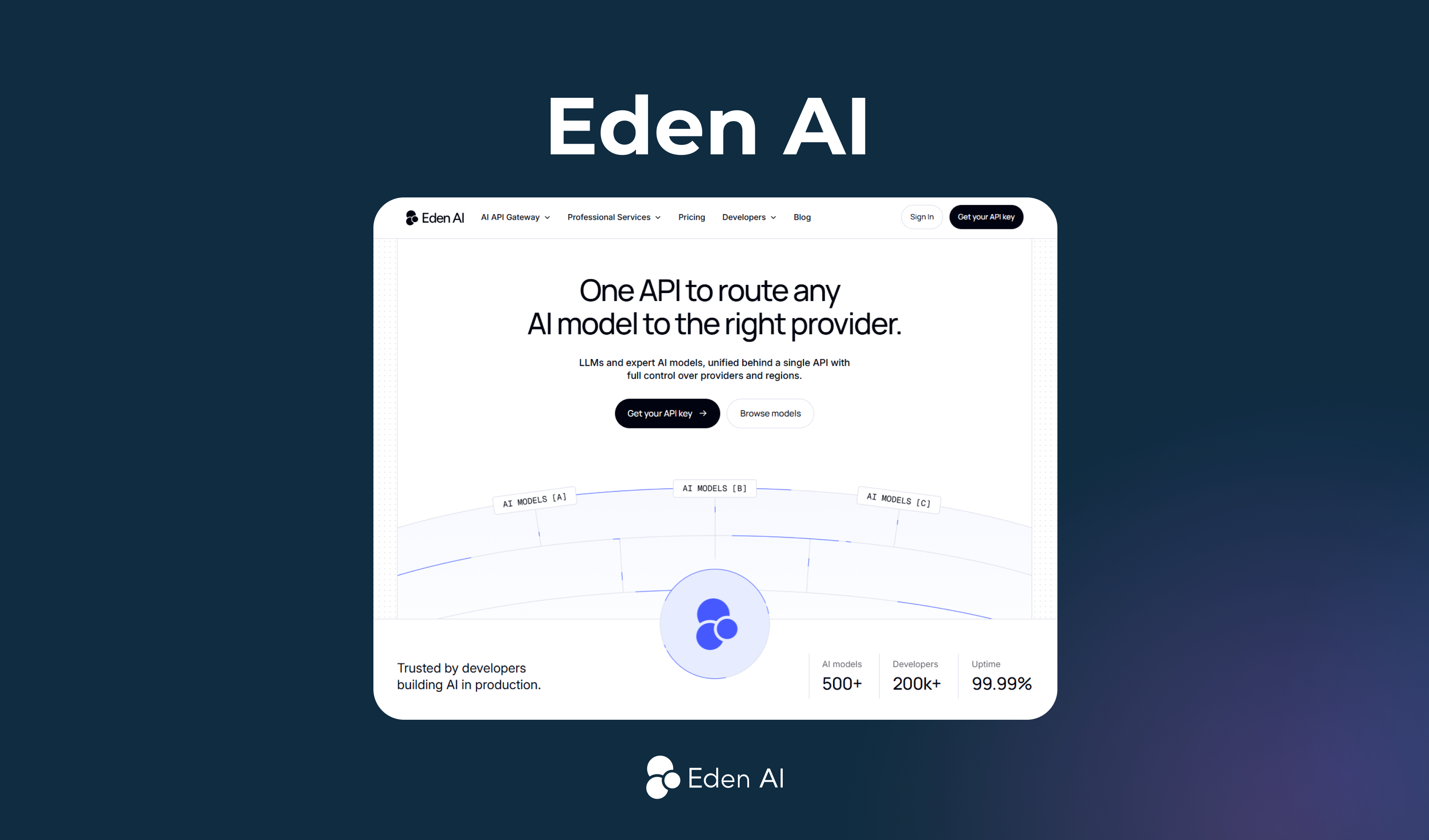
For European teams, the main advantage is its EU setup. Eden AI offers a dedicated EU endpoint, DPA availability, and European data residency options, helping teams keep AI requests, logs, and customer data within a clearer compliance framework.
Eden AI supports access to 500+ models across LLMs, OCR, speech-to-text, translation, embeddings, image, and document processing. It also includes routing capabilities such as provider comparison, fallback logic, usage tracking, and centralized billing.
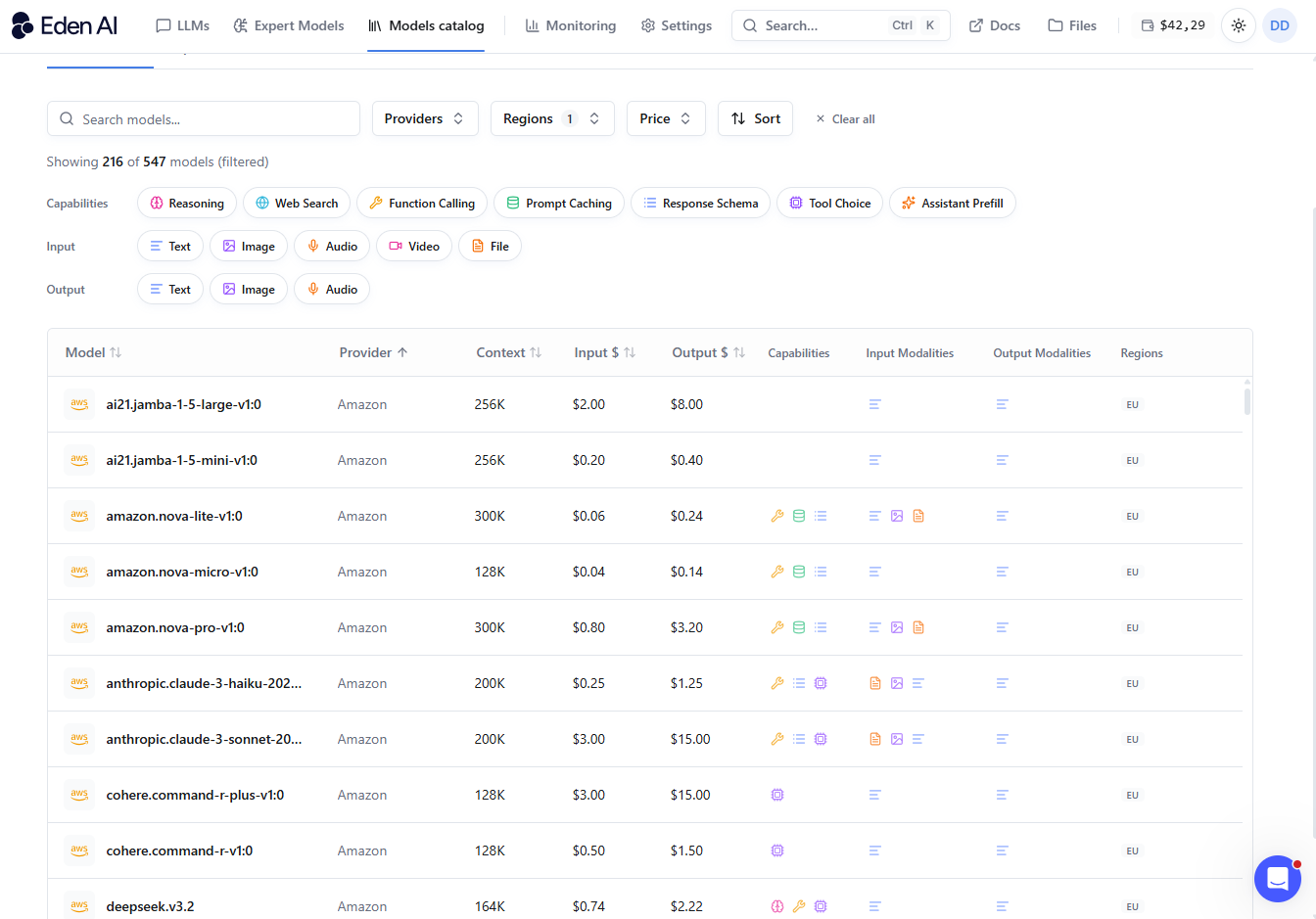
Pricing: is based on a pay-as-you-go model, which makes it practical for both testing and production workloads without committing to a fixed provider contract too early.
Best for: European developers and product teams that need EU routing, a DPA, and broad AI model access from one API.
Try Eden AI here
2. EUrouter - Best for pure European LLM routing
EUrouter is a European AI gateway that lets developers access and route between AI models through one API. It is designed as a drop-in OpenAI-compatible gateway for teams that want pure LLM routing with EU data residency as the default constraint.
Its European angle is narrower and more explicit than Eden AI’s. EUrouter focuses on keeping every request handled inside Europe, with EU servers, zero data retention, GDPR-ready routing, and a DPA available. That makes it a strong fit when the main procurement question is not broad AI coverage, but whether AI traffic can stay inside an EU data perimeter.
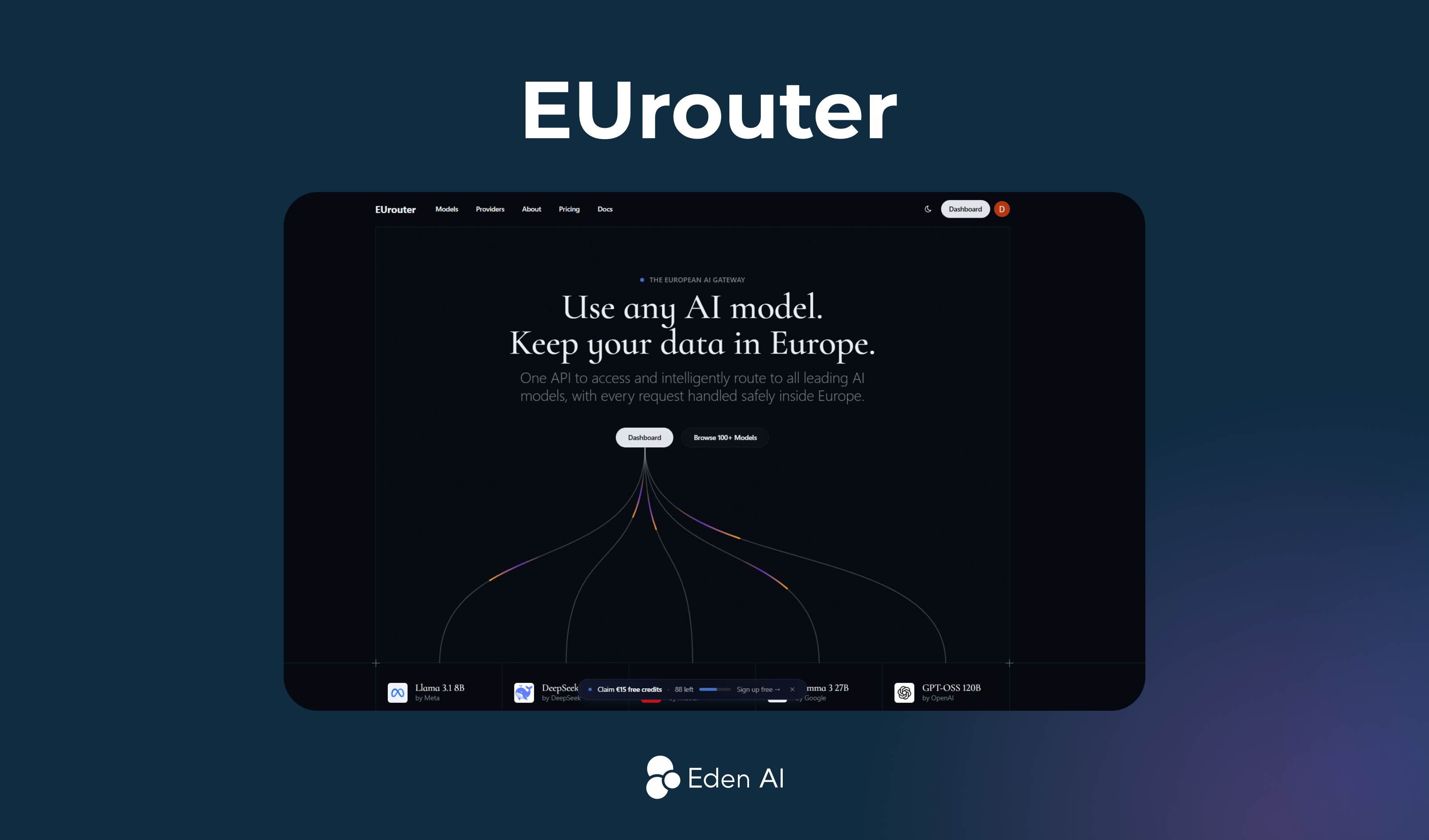
EUrouter supports access to 100+ AI models and includes smart routing for price, latency, and quality. It also includes failover, API keys, usage limits, observability, and OpenAI-compatible integration.
Pricing: EUrouter offers a free plan with pay-for-usage, then paid plans with lower markup as usage grows.
Best for: European teams that need a focused OpenRouter-style replacement for LLM routing inside Europe.
Try EUrouter here
3. Orq.AI - Best for LLMOps teams
Orq.AI is a European LLMOps platform for teams that need to build, test, deploy, and monitor AI applications from one workspace. It is designed less as a pure routing gateway and more as an operational layer for production LLM systems.
For European teams, Orq.AI’s main advantage is its enterprise setup. It supports EU data residency options, GDPR alignment, SOC 2 certification, and deployment choices such as cloud, private cloud, VPC, hybrid, or self-hosted environments. Teams should still confirm DPA terms and exact data-flow coverage during procurement.
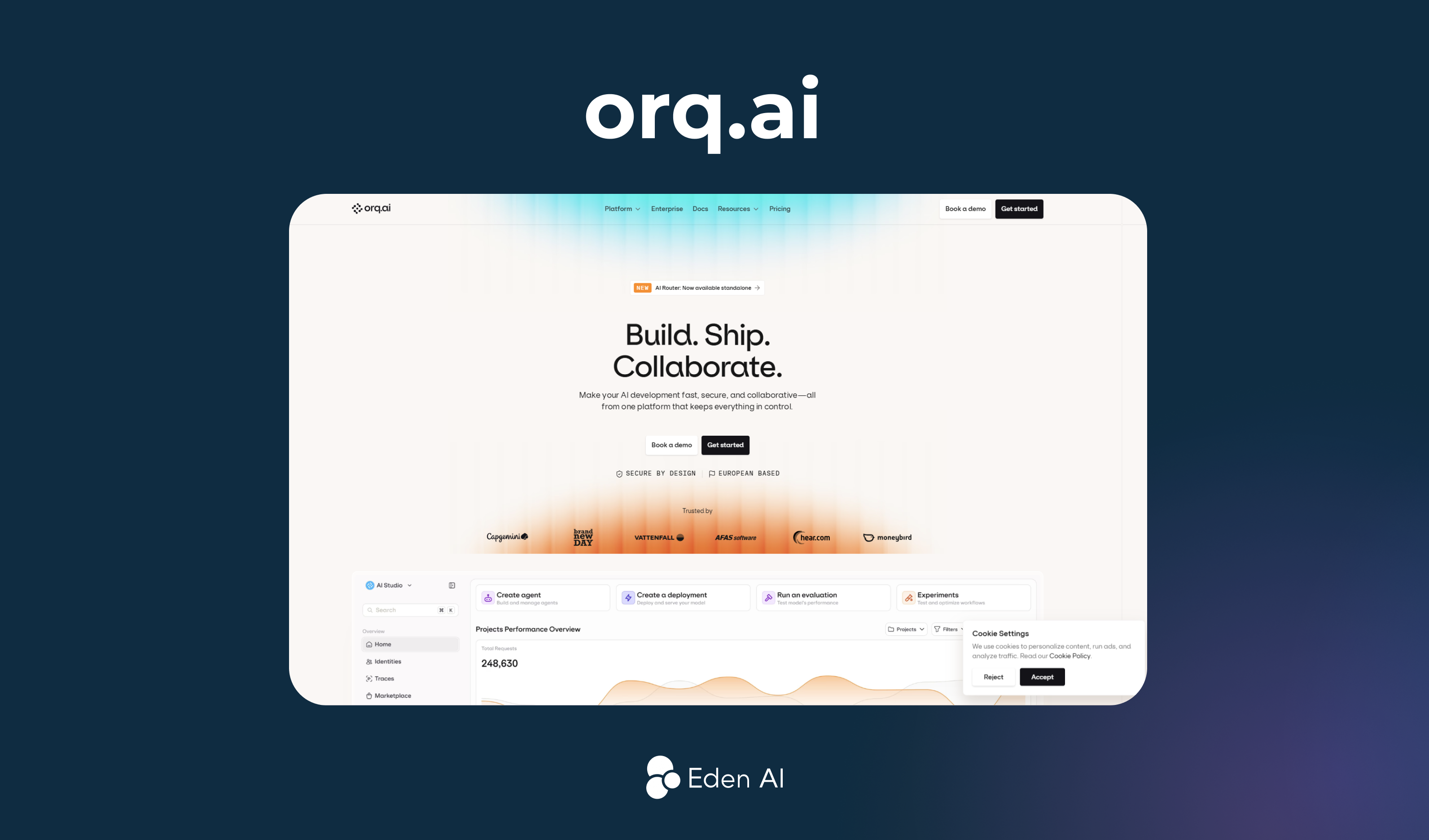
Orq.AI supports access to 300+ models through its AI gateway. Its strongest features are observability, traces, prompt management, online and offline evaluations, regression testing, guardrails, analytics, and deployment versioning.
Pricing: Orq.AI offers a free developer plan, with paid and enterprise plans for larger teams and higher production needs.
Best for: LLMOps, product, and engineering teams that need evaluation, monitoring, and deployment workflows around AI applications.
Try Orq.AI here
4. Requesty - Best for cost and performance optimization
Requesty is a unified LLM gateway for teams that want to route, monitor, and optimize model usage through one API. It is built around cost control, latency routing, caching, fallbacks, and governance rather than broad AI model categories.
Its EU credentials are stronger than many generic LLM routers, but they should be read precisely. Requesty offers an EU endpoint hosted in Frankfurt, zero request body retention, DPA availability, and EU data residency controls. For strict compliance reviews, teams should still verify the full provider chain for each model they enable.
.png)
Requesty supports 400+ AI models and 20+ providers, with routing policies, automatic fallbacks, load balancing, prompt caching, spend limits, observability, and bring-your-own-key support.
Pricing: Requesty charges a 5% markup on base model costs, with no subscription, seat fees, or minimum spend. Enterprise plans are custom.
Best for: teams that want to reduce LLM costs and improve reliability while keeping EU routing options available.
Try Requesty here
5. Cortecs - Best for EU-sovereign enterprise deployments
Cortecs is a European LLM router built for teams that want model access, routing, and compliance controls inside a European infrastructure setup. It is positioned more toward sovereign AI inference than general-purpose AI orchestration.
For European teams, the main value is its EU-sovereign approach. Cortecs says data stays in Europe, runs on European cloud infrastructure, and is covered through a GDPR-ready setup where Cortecs acts as the primary data processor with one DPA. This makes it relevant for enterprises reviewing sensitive workloads, private infrastructure requirements, or stricter vendor-chain control.
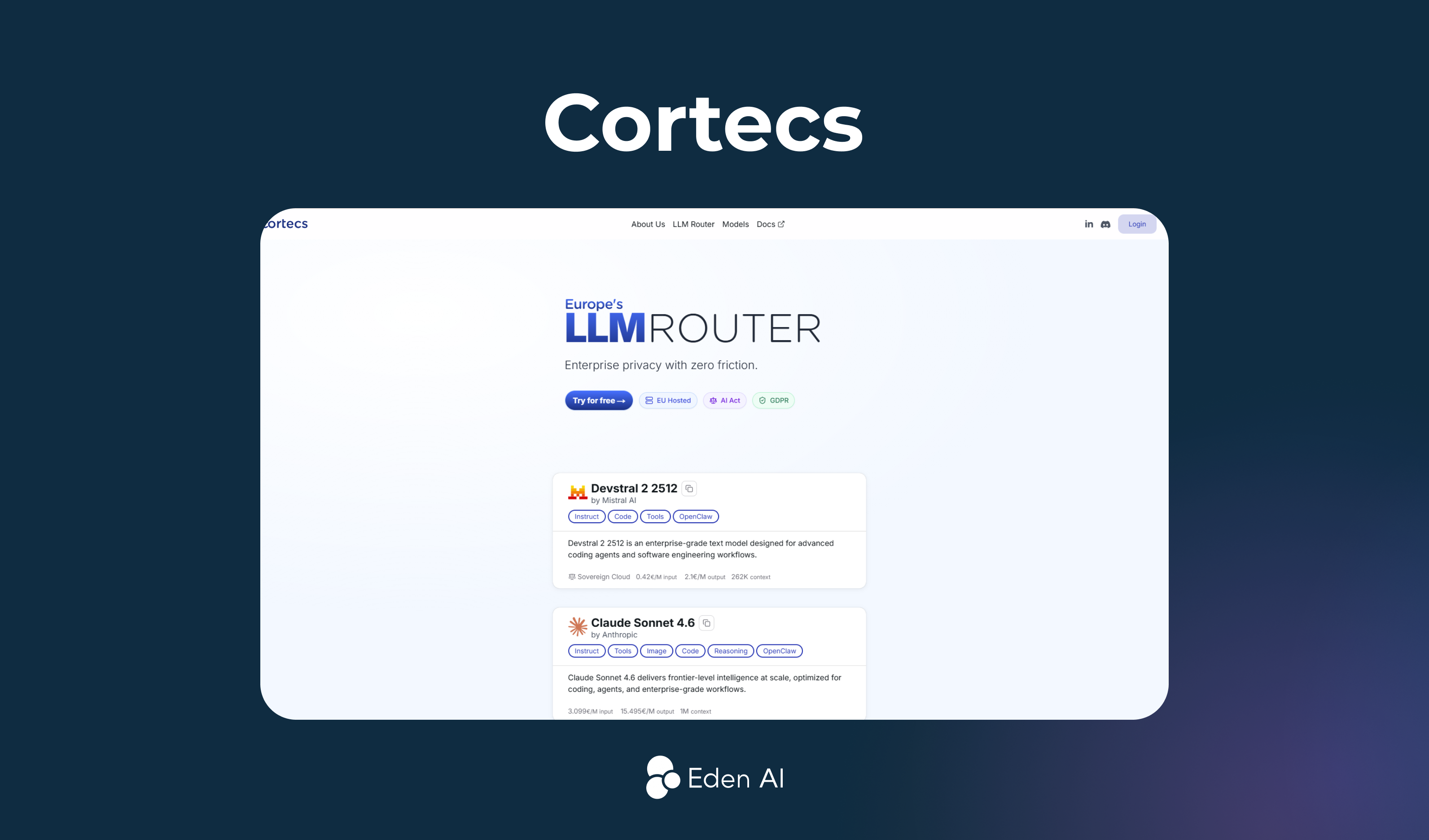
Cortecs supports 150+ model endpoints from European providers and includes routing for cost, speed, and resilience. It also offers dedicated inference options, which makes it more relevant for controlled enterprise deployments than a simple shared gateway.
Pricing: Cortecs uses usage-based pricing with a 5% platform fee applied when topping up credits.
Best for: European enterprises that need sovereign LLM routing, dedicated inference, and tighter control over where AI workloads run.
Try Cortecs here
How to choose the right European OpenRouter alternative
Developers should consider your output needs, real costs, and privacy control, and run a short test when choosing an AI API gateway to ensure selecting the best platform for your needs. We provide more detailed comparison factors below.
Match to your output needs: LLMs vs. expert models
Start with the outputs your product actually needs. If the workload is only chat, summarization, coding, or agent calls, a pure LLM router may be enough. If you also need OCR, speech-to-text, translation, embeddings, image analysis, or document parsing, choose a gateway that covers expert models too.
Check whether each model category uses the same API, billing system, logs, and fallback rules. Otherwise, you may replace one integration problem with several smaller ones.
Compare total cost, not just token price
Do not compare gateways only on the model’s listed token price. Add platform markup, minimum spend, subscription fees, seat fees, cached-token pricing, retry costs, and fallback behavior.
Then estimate cost for your real workload, not a demo prompt. Include average input length, output length, traffic spikes, failed calls, and fallback usage. A cheaper model can become more expensive if latency, retries, or routing rules are poorly configured.
Verify GDPR controls and DPA availability
Ask for the DPA before testing sensitive workloads. A DPA is the data processing agreement between your company and the vendor. Under GDPR Article 28, it defines how the processor handles personal data on your behalf.
Before signing, ask where prompts, outputs, logs, and metadata are processed and stored. Check sub-processors, retention periods, deletion rules, breach notification terms, and whether EU data residency applies to every enabled model.
Run a short proof-of-concept test
Run a small proof of concept before committing. Send at least 100 real API calls through the gateway using representative prompts, expected response lengths, and traffic patterns. Measure latency, error rate, fallback behavior, cost per successful request, and output quality.
Test what happens when the primary model is unavailable or rate-limited. Also check the developer experience: API compatibility, logs, debugging tools, billing visibility, and how easy it is to disable a provider.
Pros and Cons of OpenRouter Alternatives
Each OpenRouter alternative comes with its own advantages and limitations. Some platforms provide broader AI capabilities or stronger privacy guarantees, while others specialize in LLM routing or cost optimization. Comparing the pros and cons of each option helps developers identify the best AI gateway for their specific use case.
Pros
- EU data residency
- GDPR compliance
- multi-provider routing
- cost optimization
Cons
- fewer model providers than global gateways
- some platforms limited to LLMs.
Conclusion
OpenRouter is a powerful AI gateway, but several European alternatives now offer strong routing, governance, and privacy guarantees. Platforms like Eden AI, EUrouter, Orq.AI, Requesty, and Cortecs provide different strengths depending on whether developers prioritize model variety, governance, or LLM routing.
If your project requires access to multiple AI capabilities beyond LLMs, a unified AI API such as Eden AI may be the most flexible solution.

.jpg)