
Summarize this article with:
A university preparing an LLM procurement can use the following sequence:
- Define approved and prohibited use cases.
- Classify each use case as low, medium or high risk.
- Set the maximum annual budget.
- Decide whether the institution needs user licences, APIs or both.
- Check GÉANT, NREN and national framework availability.
- Write capability-based requirements rather than naming one model.
- Request HECVAT, accessibility and security evidence.
- Conduct DPIA screening.
- Identify potential Annex III high-risk systems.
- Draft the DPA, subprocessor and international-transfer terms.
- Add model-change, liability and exit provisions.
- Run a limited pilot with hard quotas.
- Compare actual cost and quality by use case.
- Complete any required DPIA and FRIA.
- Scale only the routes that meet cost, quality and compliance thresholds.
A university should not have to repeat a procurement process every time a better language model appears. The central principle of university LLM procurement is therefore to separate the institutional contract from the models used underneath it.
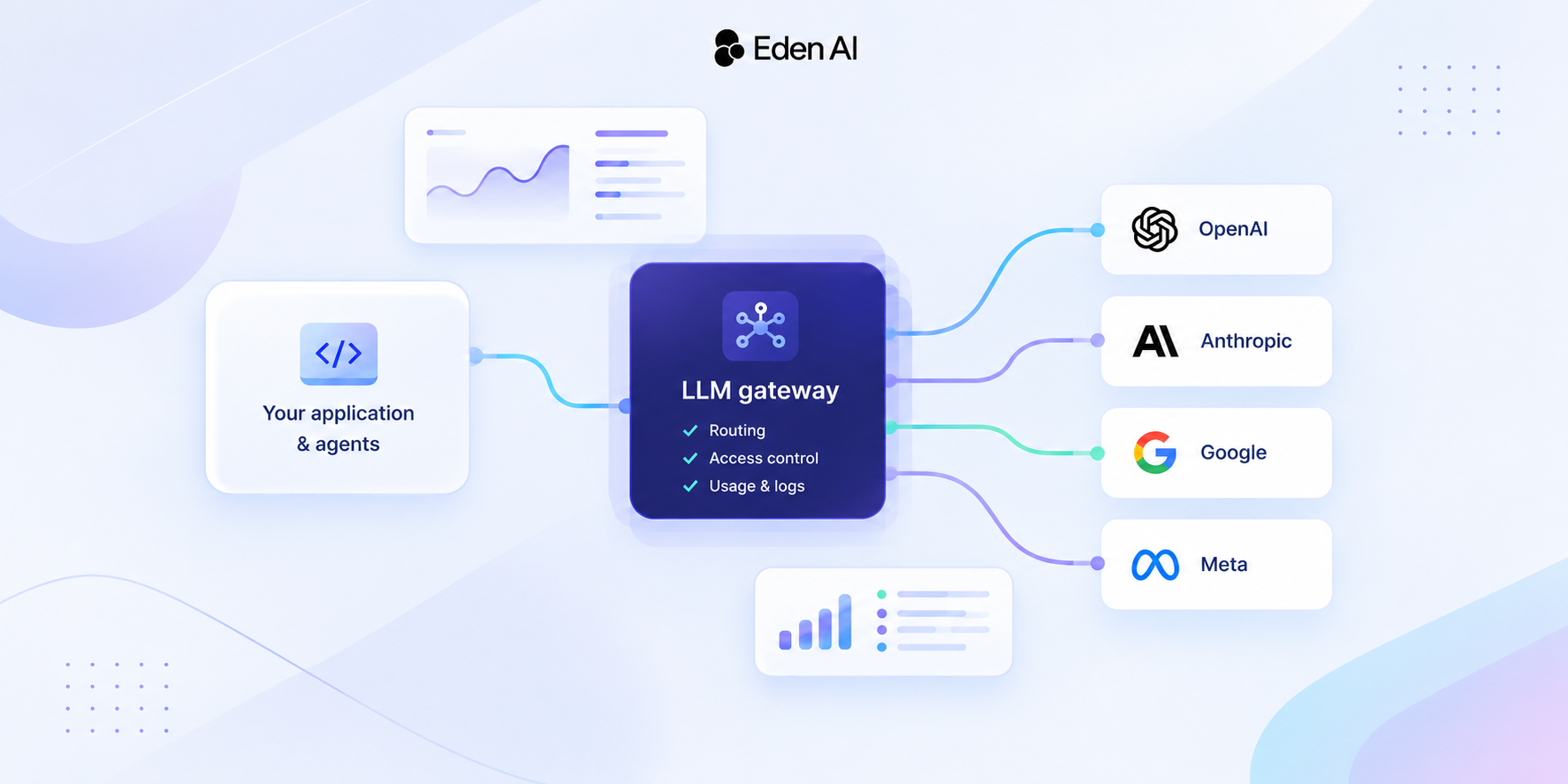
A unified API gives the university one contractual, security and governance layer while allowing approved applications to use models from multiple providers. Model selection can then change according to cost, capability, data location and risk classification without requiring a new contract for every model.
This guide explains how EU higher-education institutions can buy and deploy LLM services in 2026, including:
- public procurement and NREN framework options;
- HECVAT and accessibility reviews;
- DPIA and Fundamental Rights Impact Assessment requirements;
- per-seat and pooled-token cost models;
- risk-based routing policies;
- contract protections;
- SSO, quotas, logging and phased deployment.
The University AI Procurement Model in 2026
AI procurement in higher education differs from a standard enterprise software purchase in three ways.
Public procurement obligations
Public universities may be contracting authorities under Directive 2014/24/EU on public procurement. Above the applicable EU threshold, the institution must use an appropriate competitive procedure. Below that threshold, national procurement rules and internal purchasing policies still apply.
The 2026 thresholds depend on the type of contracting authority and contract. Universities should verify the current threshold and national implementation rules with their procurement office rather than assuming that an AI pilot qualifies for a direct award.
A sole-source justification based only on the name of a preferred model is weak. The specification should instead describe functional requirements such as:
- supported use cases;
- latency and availability;
- European processing locations;
- zero-retention requirements;
- identity federation;
- logging and auditability;
- model portability;
- accessibility;
- interoperability with existing applications.
This avoids writing a tender around one commercial product.
Framework agreements and NREN services
European universities can often shorten the purchasing process through national research and education networks or existing cloud frameworks.
The GÉANT OCRE 2024 framework began on 3 February 2025 and runs until February 2030. It covers hundreds of IaaS, PaaS and SaaS offerings across 39 participating countries. Eligible research and education institutions may procure services through direct award, mini-competition or desktop mini-competition, subject to national implementation.
Authentication infrastructure may be supplied separately from the commercial procurement channel:
- DFN-AAI provides federated authentication and authorisation for German research and education institutions and participates in eduGAIN.
- RENATER’s Fédération Éducation-Recherche provides a SAML2-based identity federation for French higher education and research.
- Other NRENs provide equivalent procurement, network or identity services in their respective countries.
GÉANT, DFN-AAI and RENATER do not perform the same function. GÉANT OCRE is primarily a procurement framework, while DFN-AAI and RENATER federation services address identity and trust. A university architecture may use both.
Distributed institutional governance
University purchasing decisions are rarely controlled by a single department. A production deployment may require approval or input from:
- the CIO or digital transformation office;
- procurement;
- the DPO;
- information security;
- legal counsel;
- accessibility specialists;
- teaching and learning teams;
- faculty representatives;
- student representatives;
- records management;
- research ethics or academic integrity committees.
EDUCAUSE found that technology, cybersecurity and privacy teams are frequently involved in AI procurement, but teaching and learning professionals were included by only 58% of respondents despite being directly affected by the tools. A workable governance model assigns decision rights before evaluating vendors. The DPO should not be asked to define pedagogical policy, and faculty committees should not be expected to approve technical security controls.
University LLM Procurement Pathways Compared
The timelines below are planning estimates. Actual duration depends on contract value, national law, institutional thresholds, framework availability and the completeness of the vendor’s documentation.
A unified API does not exempt the institution from procurement law. Its advantage is architectural and contractual: the tender can procure a governed AI access layer rather than one named model. Once the gateway is approved, the university can add, remove or replace underlying models within predefined contractual and risk controls. The contract remains stable even as the model catalogue changes.
Suggested diagram: A horizontal flowchart comparing direct vendor, public tender, NREN framework and unified-API procurement, showing the number of contracts, assessments and model-change approvals required for each.
Alt text: “Comparison of four university LLM procurement pathways, showing procurement time, number of contracts, compliance assessments and ability to change AI models.”
HECVAT, ERAT and Accessibility Reviews
Use HECVAT as the vendor evidence pack
The Higher Education Community Vendor Assessment Toolkit, or HECVAT, is a vendor-risk questionnaire developed by the higher-education community with EDUCAUSE, Internet2 and REN-ISAC. HECVAT 4 includes dedicated coverage for:
- cybersecurity;
- privacy;
- artificial intelligence and machine learning;
- data lifecycle management;
- third-party dependencies;
- IT accessibility;
- regulatory compliance.
EDUCAUSE lists HECVAT 4.1.6 as the current version and confirms that the fourth version added privacy and AI questions.
A direct multi-vendor implementation may require the university to review a HECVAT or equivalent evidence package for every contracted model provider. With a unified API, the institution assesses the gateway vendor once, then reviews how that vendor qualifies, contracts with and monitors its subprocessors.
The gateway’s HECVAT response should still identify:
- each relevant category of subprocessor;
- the process for adding or removing subprocessors;
- the security requirements imposed on providers;
- where requests and logs are processed;
- which providers retain prompts;
- how provider incidents are reported;
- which accessibility obligations apply to the gateway interface.
“One assessment” must not mean “no visibility into the supply chain.”
ERAT and local risk-assessment standards
Some institutions also use an internal ERAT, enterprise risk assessment toolkit or equivalent technology-risk process. The exact meaning and scoring model differ by university system. Where an ERAT process exists, procurement teams should map the gateway’s evidence to the institution’s standard control families rather than running an unrelated review from the beginning. Typical mappings include:
- identity and access management;
- encryption;
- business continuity;
- incident response;
- supplier management;
- privacy;
- accessibility;
- data retention;
- change management.
HECVAT supplies vendor evidence. The institution’s ERAT or enterprise-risk process determines whether that evidence meets its risk appetite.
Accessibility is a contractual requirement
Accessibility should be tested before award, not added to the implementation backlog. HECVAT 4 includes a dedicated accessibility section, and EDUCAUSE recommends that providers meet or exceed WCAG 2.1 AA or a newer applicable standard.
For an EU-primary procurement, the tender should reference the accessibility requirements that apply in the relevant member state, commonly including EN 301 549 and WCAG criteria. For US institutions, the corresponding legal framework may include the Americans with Disabilities Act, Section 504 and Section 508. ADA requirements are the US equivalent, not part of the EU procurement workflow.
Request:
- a current accessibility conformance report or VPAT where applicable;
- the tested WCAG version and conformance level;
- keyboard and screen-reader test evidence;
- accessibility of generated files and exports;
- an accessibility remediation roadmap;
- contractual remediation deadlines;
- advance notice of interface changes affecting accessibility.
Classify AI Use Cases Before Selecting Models
A university should not apply the same approval process to lecture-note summarisation and automated admissions scoring. The following three-tier model provides a practical starting point.
Routing policies should enforce the classification technically.
For example:
- a low-risk route may allow several global providers;
- a medium-risk route may permit only zero-retention providers in approved regions;
- a high-risk route may pin the application to one validated model version and block automatic fallback;
- prompts containing special-category data can be rejected or redirected to a private deployment;
- applications can receive separate API keys, budgets and model allowlists.
This is more reliable than asking every user to choose a compliant model manually.
DPIA for AI Deployments
Under Article 35 of the GDPR, a Data Protection Impact Assessment is required before processing that is likely to result in a high risk to individuals’ rights and freedoms, particularly when new technologies are involved.
Not every LLM experiment automatically requires a full DPIA. The institution should first conduct and document a DPIA screening. A full assessment is more likely to be required where the application involves:
- systematic evaluation or profiling;
- vulnerable data subjects, including students;
- large-scale personal-data processing;
- special-category data;
- monitoring;
- automated or AI-supported decisions;
- novel combinations of institutional datasets;
- consequences for access to education or student progression.
The European Data Protection Supervisor’s guidance on generative AI and the EUDPR is formally directed at EU institutions, bodies, offices and agencies. It is not directly binding on ordinary member-state universities, but it provides a useful public-sector reference for generative-AI governance.
EU institutions must comply with the European Union Data Protection Regulation, Regulation 2018/1725, rather than the GDPR in the same way as a national university. The EDPS guidance stresses early DPO involvement, lifecycle documentation, lawful basis, purpose limitation and DPIAs for likely high-risk processing.
A university DPIA should document:
- Purpose and lawful basis
Define the educational or administrative purpose, controller, processors and lawful basis. - System and data flow
Identify the application, gateway, model provider, hosting regions, subprocessors, logs and support access. - Data categories
Separate ordinary personal data, special-category data, confidential research data and non-personal content. - Necessity and proportionality
Explain why an LLM is needed and whether a less intrusive method could achieve the same result. - Risks to individuals
Include disclosure, hallucinated personal data, bias, exclusion, loss of confidentiality, excessive monitoring and incorrect decisions. - Mitigations
Include data minimisation, ZDR, regional routing, encryption, role-based access, human review, retention limits and incident procedures. - Residual risk and consultation
Record the DPO’s advice and determine whether prior consultation with the supervisory authority is required.
FRIA for high-risk educational AI
A DPIA and a Fundamental Rights Impact Assessment are related but not interchangeable.
Under the EU AI Act, Regulation 2024/1689, Annex III identifies certain educational and vocational-training systems as high risk. These include systems used to:
- determine access or admission;
- assign people to educational institutions or programmes;
- evaluate learning outcomes where the result affects the educational process;
- assess the appropriate level of education;
- monitor or detect prohibited behaviour during tests.
Where a public-law university deploys an in-scope high-risk AI system, Article 27 may require a Fundamental Rights Impact Assessment before first use. The FRIA should sit alongside the DPIA.
The two documents may share:
- the system description;
- intended purpose;
- users and affected groups;
- data-flow diagrams;
- provider and deployment details;
- human-oversight mechanisms.
They should retain separate risk registers:
A grading or admissions tool may therefore require both assessments even where much of the factual system description is reused.
Budget Models: Per-Seat vs Pooled Tokens
Cost is not a secondary issue. In EDUCAUSE’s 2025 QuickPoll, 32% of respondents identified cost or lack of budget as a major AI-procurement challenge, while 21% selected opaque vendor contract terms.
Published higher-education planning benchmarks commonly place enterprise AI licensing at approximately $140–$300 per user per year, depending on product, included functionality, minimum commitments and negotiation.
At the bottom of that range:
- 4,000 licensed students cost approximately $560,000 per year;
- 10,000 licensed users cost approximately $1.4 million per year;
- 20,000 licensed users cost approximately $2.8 million per year.
This explains why licensing an entire student body can exceed $500,000 annually even before integration, support, training and governance costs are included. EDUCAUSE also notes that many institutions cannot afford enterprise-wide AI licences and are considering APIs as an alternative.
Per-seat licensing
Model: The institution pays a fixed annual or monthly licence for every enabled user.
Using the midpoint of the benchmark: 5,000 users × $220 per user per year = $1,100,000 annual licence cost. The actual contract may include minimum volumes, implementation fees, support tiers or premium API charges.
Pooled-token purchasing
Model: The institution buys or is invoiced for shared API usage. Departments and applications consume from a governed pool.
Illustrative pooled-token calculation
The following Eden AI figures are illustrative, not a quotation or guaranteed saving. Provider prices and model availability change, so the final model mix should be checked in the live catalogue and on Eden AI pricing.
Assume:
- 500 faculty users;
- 25% active on an average working day;
- 40,000 input tokens and 10,000 output tokens per active user;
- 22 working days per month.
125 active users per day × 50,000 total tokens × 22 days = 137,500,000 tokens per month
Suppose routing produces an illustrative blended provider cost of:
- $2.50 per million input tokens;
- $10 per million output tokens;
- 80% input and 20% output.
Input: 110 million × $2.50 / million = $275, Output: 27.5 million × $10 / million = $275
Illustrative provider cost = $550 per month. Illustrative annual provider cost = $6,600
That calculation excludes implementation, support, portal development, premium models, retrieval infrastructure and contractual service levels. A prudent production budget might set a substantially higher ceiling, such as $2,500–$5,000 per month, until real usage patterns are established.
The point is not that every university will spend $550 per month. The point is that token consumption can be measured directly, whereas a licence is charged whether or not the user is active.
Predictability: the strongest objection to token pricing
Fixed-fee vendors argue that per-seat licensing is safer because the budget is known in advance. That concern is valid. A pooled-token deployment without controls can produce unpredictable invoices.
The answer is not to accept unlimited consumption. It is to apply the same controls used for cloud infrastructure:
- monthly institutional spend cap;
- quota per user;
- quota per department;
- separate limits for students, faculty and applications;
- maximum output-token settings;
- rate limits;
- model-specific cost ceilings;
- approval workflow for premium models;
- alerts at 50%, 75% and 90% of budget;
- automatic routing to a lower-cost model after a threshold;
- hard rejection when the approved cap is reached.
For example:
- Institutional annual ceiling: $120,000
- Monthly operational cap: $10,000
- Faculty quota: $20 per month
- Student quota: $5 per month
- Premium-model access: approved projects only
The maximum annual spend is then as predictable as a fixed licence, while the expected spend remains lower because unused allocations are not automatically billed. A university can also contract for a fixed annual maximum with monthly usage reporting. This combines procurement predictability with usage-based allocation.
Vendor and Contract Checklist
The contract should cover the gateway, underlying model providers and institutional applications as one service chain.
How Eden AI’s one-DPA model should be evaluated
Eden AI positions its platform as a single API and billing layer across hundreds of models. Its public pricing documentation states that self-serve customers pay provider rates plus a 5.5% platform fee, while advanced contracts may include custom billing, higher limits, private deployments and dedicated support.
For a university, “one DPA” should mean:
- Eden AI is the institution’s principal contractual processor for the gateway service.
- Relevant downstream model providers are documented as subprocessors or otherwise assigned a clear legal role.
- The DPA specifies how provider-specific retention, region and training restrictions are enforced.
- Subprocessor changes trigger the agreed notification process.
- The university can limit its approved provider list.
- The university can export usage and configuration data.
- Termination triggers deletion and transition obligations.
The institution should verify these points against the proposed contract rather than relying on the phrase “one DPA” alone.
Deployment Architecture: Pilot to Production
Phase 1: Controlled pilot, months 1–3
Scope: 10–20 faculty and administrative users across several departments.
Tasks:
- define two or three approved use cases;
- exclude grading, admissions and progression decisions;
- complete DPIA screening;
- select two or three approved models;
- configure per-user quotas;
- establish prompt and output handling rules;
- log cost, latency, error rate and model selection;
- collect user feedback using a common evaluation rubric;
- prohibit special-category and confidential research data unless explicitly approved.
The pilot should answer procurement questions, not merely demonstrate that an LLM can generate text.
Track:
- active users;
- tokens per active user;
- cost per completed task;
- model failure rate;
- human correction time;
- use-case abandonment;
- data-policy violations;
- accessibility issues;
- support volume.
Working Python routing example
The following example uses Eden AI’s OpenAI-compatible chat-completions pattern. Model identifiers should be confirmed in the live model catalogue before deployment.
import os
from typing import Final

import requests
from requests import Response

API_URL: Final = "https://api.edenai.run/v3/chat/completions"
API_KEY: Final = os.environ["EDENAI_API_KEY"]

# The application chooses a policy route.
# End users do not select arbitrary providers.
MODEL_ROUTES: Final = {
    "low_risk_general": "openai/gpt-4o-mini",
    "structured_writing": "anthropic/claude-sonnet-4",
    "multilingual": "google/gemini-2.5-flash",
    "eu_restricted": "mistral/mistral-small-latest",
}

MAX_OUTPUT_TOKENS: Final = {
    "low_risk_general": 800,
    "structured_writing": 1_500,
    "multilingual": 1_000,
    "eu_restricted": 800,
}


def call_university_llm(
    route: str,
    prompt: str,
    user_reference: str,
) -> dict:
    """Send a request through an institution-approved model route."""

    if route not in MODEL_ROUTES:
        raise ValueError(f"Unapproved route: {route}")

    payload = {
        "model": MODEL_ROUTES[route],
        "messages": [
            {
                "role": "system",
                "content": (
                    "Do not infer sensitive personal data. "
                    "Flag uncertainty and require human review for decisions."
                ),
            },
            {"role": "user", "content": prompt},
        ],
        "max_tokens": MAX_OUTPUT_TOKENS[route],
        "temperature": 0.2,
        "metadata": {
            # Use a pseudonymous internal reference, not a student name.
            "institution_user_reference": user_reference,
            "policy_route": route,
        },
    }

    headers = {
        "Authorization": f"Bearer {API_KEY}",
        "Content-Type": "application/json",
    }

    response: Response = requests.post(
        API_URL,
        headers=headers,
        json=payload,
        timeout=60,
    )

    try:
        response.raise_for_status()
    except requests.HTTPError as exc:
        raise RuntimeError(
            f"LLM request failed with status {response.status_code}"
        ) from exc

    return response.json()


result = call_university_llm(
    route="structured_writing",
    prompt="Draft a rubric for a first-year economics presentation.",
    user_reference="faculty-7f18c2",
)

print(result)
Production applications should add:
- secret management;
- structured audit logging;
- prompt-size validation;
- personal-data detection where appropriate;
- retry and fallback rules;
- cost attribution;
- application-level authentication;
- output moderation;
- retention controls;
- monitoring for model retirement.
For high-risk use cases, automatic fallback should normally be disabled. A fallback model may not share the validated behaviour, documentation or conformity status of the primary system.
Phase 2: Department rollout, months 4–6
Scope: Approximately 100–300 users or several approved applications.
Tasks:
- integrate SAML or OIDC with the university identity provider;
- connect to DFN-AAI, RENATER or another federation where applicable;
- introduce role-based model access;
- allocate departmental budgets;
- create separate API keys for each application;
- complete the full DPIA where required;
- document the approved provider register;
- add EU-only and ZDR routes;
- integrate cost and security monitoring;
- create incident and model-retirement procedures;
- train local administrators and support teams.
The university should also define who may deploy LLM applications. Giving every faculty member an API key without application review recreates shadow IT behind a central invoice.
Phase 3: Institution-wide deployment, months 7–12
Scope: Eligible faculty, staff, students and production applications.
Tasks:
- integrate with Moodle, Canvas or another LMS where justified;
- apply separate policies to student, staff, research and administrative use;
- add automated cost routing for low- and medium-risk tasks;
- retain fixed model versions for high-risk systems;
- establish quarterly provider and model reviews;
- publish an approved-use-case catalogue;
- define an exception process;
- review the DPIA after material changes;
- complete FRIAs for applicable high-risk deployments;
- audit accessibility and human-oversight controls;
- test exit and portability procedures;
- review realised cost per use case against licence alternatives.
EU-Specific Deployment Requirements
Data location and international transfers
The GDPR does not categorically prohibit processing outside the EEA. It requires a lawful transfer mechanism and appropriate safeguards where personal data is transferred to a third country.
The procurement team should therefore ask:
- Where are prompts, files, embeddings, logs and backups processed?
- Is the region selected contractually or only as a dashboard setting?
- Can support personnel access data from outside the EEA?
- Which transfer mechanism applies?
- Has the institution completed any required transfer impact assessment?
- Does a fallback send requests to a different region?
- Can the API reject a request if no EU route is available?
“EU endpoint” is not sufficient evidence by itself. The data-flow diagram must cover the full service chain.
EU AI Act education requirements
The EU AI Act uses a risk-based framework. The legal classification depends on the system’s intended purpose, not simply on whether it uses an LLM.
A general writing assistant is not automatically high risk. A system that materially influences admissions, assessment, progression or access to education may fall within Annex III.
For high-risk educational AI, the procurement file should obtain or allocate responsibility for:
- risk-management documentation;
- data-governance information;
- technical documentation;
- instructions for use;
- logging;
- human oversight;
- accuracy, robustness and cybersecurity;
- post-market monitoring;
- incident reporting;
- deployer obligations;
- FRIA support where required.
The university should distinguish the model provider, gateway provider, application developer and deployer. Each may hold a different role under the AI Act.
FERPA as the US equivalent
FERPA should not be inserted into an EU university’s GDPR workflow unless the institution also handles US education records or serves a US entity. For US institutions, FERPA is the relevant federal framework for education-record privacy. It is the US equivalent consideration, alongside state privacy laws and institutional policies. An EU procurement specification should refer primarily to GDPR, national data-protection law and the EU AI Act.
Where a Unified API Fits
The AI market changes faster than a university procurement cycle. A specification written around one model can be obsolete before contract signature.
A unified API changes the unit being procured. The university buys:
- authenticated AI access;
- a standard API;
- consolidated billing;
- model and provider governance;
- routing;
- usage monitoring;
- data-location controls;
- retention controls;
- model portability;
- operational support.
It does not need to buy a permanent commitment to one model.
Eden AI is one example of this architecture. Its role should be assessed against the same vendor-neutral criteria as any other gateway:
- Does it support the institution’s required models?
- Can the institution restrict providers and regions?
- Are ZDR conditions enforceable?
- Is there one accountable support channel?
- Are costs visible per model, application and department?
- Can the university apply hard caps?
- Are model changes communicated?
- Can the institution export its data and configurations?
- Are private or dedicated deployments available where required?
- Does the DPA describe downstream providers clearly?
The strongest procurement argument is not “access to more models.” It is the ability to change models without rebuilding the institutional contract, identity layer, cost controls and governance process.



![[AUTO-DRAFT] Building an AI Document Processing Pipeline with OCR, NER, and Translation](https://cdn.prod.website-files.com/61e7d259b7746e3f63f0b6be/6a71eae9742e109df72e66d0_6a71eae854310319001ae125_building-an-ai-document-processing-pipeline-with-ocr-ner-and-translation--icone.png)