Summarize this article with:
Kimi K3.1 Pro is Moonshot AI’s post-trained upgrade of Kimi K3, with a 1M-token context window, near-Opus Terminal-Bench scores and API prices a third lower than K3. Hands-on tests and independent benchmarks show where it shines, where it slips, and why token price is not task cost.
A model can become dramatically better without becoming the best choice for every job. That is the question raised by Kimi K3.1 Pro, Moonshot AI’s new flagship, which competes in increasingly demanding coding, visual creation and agentic workloads.
In a recent hands-on evaluation, the Arena channel put Kimi K3.1 Pro through a diverse set of tasks: animated 3D scenes, website design, hiking-route research and data-rich dashboards. The results show substantial progress over Kimi K3, but also inconsistencies in visual accuracy, interface usability and information organization.
Price makes the picture more interesting. Kimi K3.1 Pro’s API rates are a third lower than Kimi K3’s, while frontier models and cheaper open-weight alternatives compete for the same workloads. So the useful question is not whether Kimi has caught up with the frontier, but where its combination of capability, reliability and cost makes it the right model to use.
What is Kimi K3.1 Pro and what changed from Kimi K3?
Moonshot AI introduced Kimi K3.1 Pro on October 23, 2026, as the first model in its K3.1 series. It is not a new architecture. Moonshot describes it as a post-trained version of Kimi K3, built with substantially more post-training compute and large-scale reinforcement learning across hundreds of downstream domains. To make that run possible, the team reworked its RL framework, long-context inference, sandbox infrastructure and environment-quality checks.
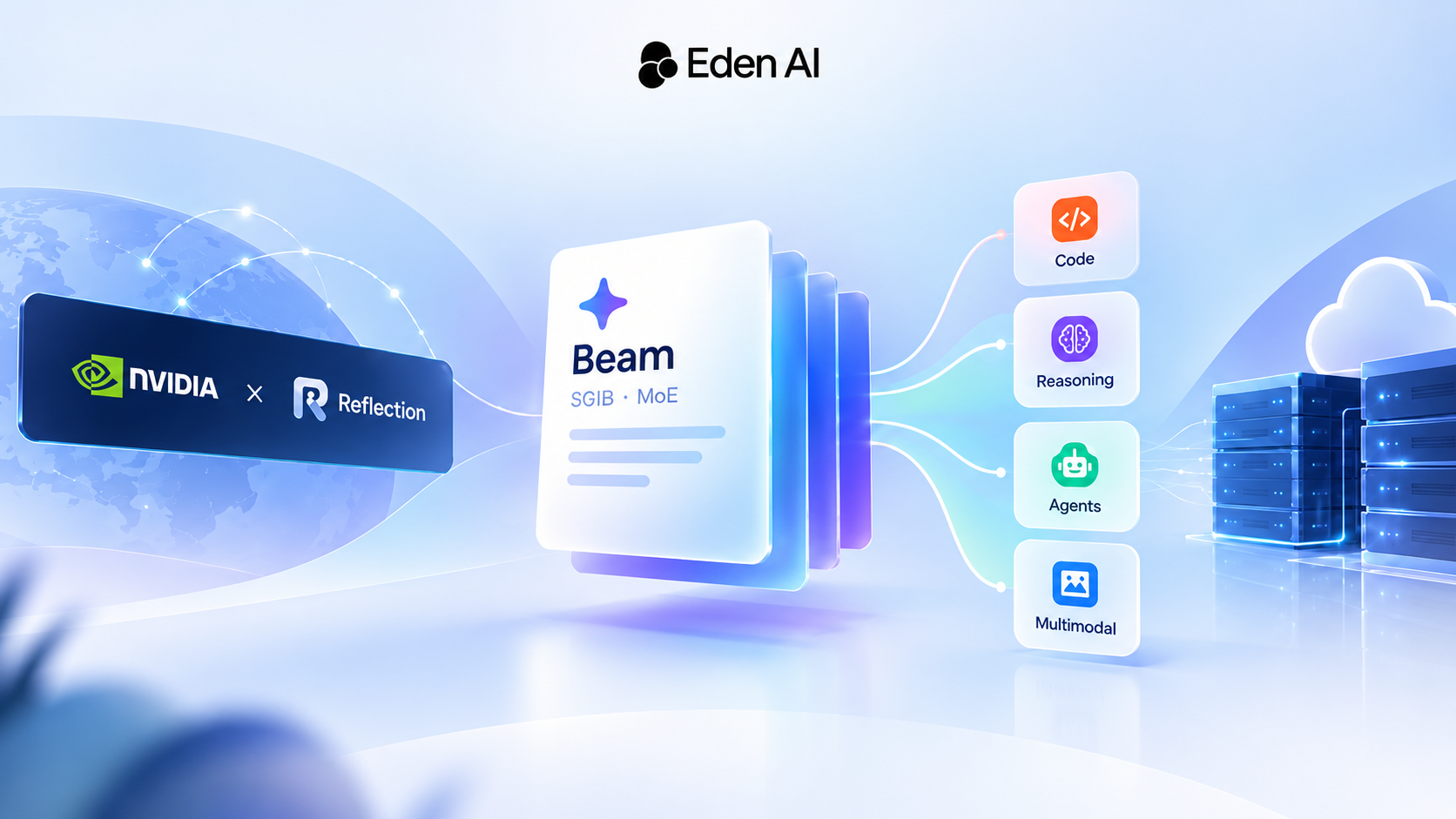
The model keeps K3’s dimensions, a Mixture-of-Experts design, and its context window of up to one million tokens, which suits large codebases, long documents and multi-step research. A Highspeed variant runs two to three times faster with the same capabilities, at a higher price. Both are available in the Kimi apps, Kimi Code and the Kimi API as kimi-k3.1-pro and kimi-k3.1-pro-highspeed, with Zero Data Retention available for API customers.
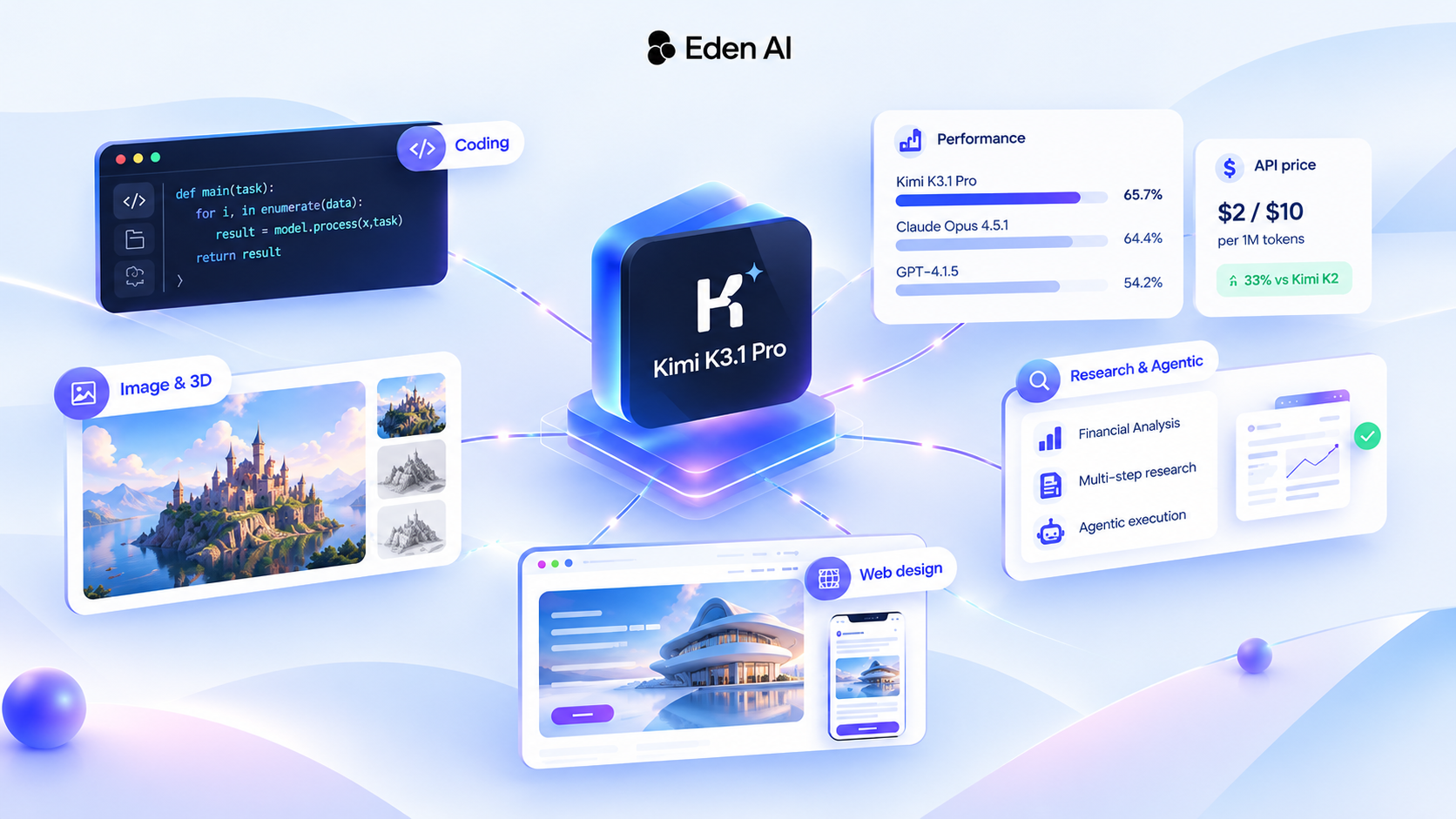
Moonshot highlights four areas of improvement: coding, 3D creation, financial research and agentic execution. Its headline number is 65.7% on Terminal-Bench 4.0, against 66.4% for Claude Opus 5.5 and 58.2% for GPT-6 Astra. On its internal hallucination stress test, the claim-level error rate fell from 23.4% for K3 to 8.3%.
Those gains are real, but a narrow gap on one coding-agent benchmark does not prove equal performance across all development work. A model can handle more complex tasks overall and still be inconsistent at specific subtasks, such as implementing a precise interface or checking whether its own solution actually works. That is exactly what the hands-on tests probe.
What the hands-on tests reveal
The Arena evaluation is useful because it judges complete outputs rather than a single score: visual coherence, instruction-following, organization and practical usability all count. Its demonstrations are qualitative comparisons, not controlled measurements of overall model quality.
3D and visual generation: more coherent, not yet precise
The 3D scene tests show the scale of the improvement over Kimi K3. In the dinosaur and bear scenes, K3.1 Pro produces more coherent movement and fewer conspicuous rendering problems. The Roman city example is another step forward: a more complete voxel-style environment instead of the sparse, disconnected result produced by the earlier model.
Improvement is not the same as consistency, though. The evaluation still finds visual artifacts and difficulty reproducing particular styles, including claymation. Other models produce stronger results on some tasks, through better environmental detail, more accurate geometry or more convincing animation.
The vase illustration test makes a similar point. Mapping a two-dimensional design onto a curved surface requires more than attractive drawing: the output must respect the object’s shape and perspective, and some competing models handle that constraint better than Kimi.
Moonshot’s own numbers tell the same story. On BenchCAD, which tests 3D reconstruction through generated CAD code, K3.1 Pro scores 92.7% with tools, close to but below Claude Opus 5.5 (96.2%) and GPT-6 Astra (95.9%). For production use, the question is not whether a model can generate an impressive scene, but how reliably it follows the spatial and stylistic constraints of the brief. A scene can look convincing at first glance and still contain structural mistakes that only show up on close inspection.
Web development: polished is not the same as usable
The website tests reveal a different limitation. Kimi K3.1 Pro produces visually appealing layouts, with considered typography and a more organized presentation than Kimi K3. But the ramen shop example shows how a design can look finished while placing essential ordering controls too far down the page.
The toy store example shows another kind of prompt mismatch: a restrained visual style and adult-oriented branding do not suit a product for children. The model produced a coherent interface without capturing the intended audience or brand personality.
The racing dashboard is more encouraging. Rider information is clearer than in Kimi K3’s cluttered layout, although a large part of the header is used inefficiently.
Front-end generation bundles several separate jobs: writing working code, understanding intent, organizing information and making the interface easy to use. A strong result needs all four, not just a good-looking page.
Research and data visualization: structure is part of the answer
The research-driven tasks show why these models are useful beyond question answering. In the Alpine trail example, Kimi K3.1 Pro organizes route information around a central map with supporting details. The global data center visualization likewise gathers information and presents it in a more structured form than its predecessor.
Competing models, however, produce comparable or cleaner layouts at lower estimated task costs. And retrieving information, arranging it and representing it accurately are three distinct challenges: a well-organized map can still contain incomplete, outdated or misread data. For reports, dashboards and research pages, evaluation has to cover the underlying facts as well as the presentation.
Across all three areas, the same three questions separate an impressive demo from a production-ready output:
How does Kimi K3.1 Pro compare with Claude, GPT and open-weight rivals?
The Arena examples show a more capable, more visually coherent model than Kimi K3, but they do not establish a universal ranking. The picture gets clearer when the demos are read alongside benchmark results and independent evaluations.
Moonshot’s own comparison is mixed. K3.1 Pro leads on long-horizon software engineering (SWE-Marathon) and posts a state-of-the-art 64.4 on OfficeQA Pro v2, a financial-document benchmark. It sits just behind Opus 5.5 on Terminal-Bench 4.0 and trails clearly on Terminal-Bench Science. These are vendor-published results, and several competitor scores come from other reports and the official Terminal-Bench leaderboard, so they should not be read as a single head-to-head experiment.
Independent testing pulls in both directions. Artificial Analysis measured 67% on Terminal-Bench 4.0, slightly above Moonshot’s own figure, and ranks K3.1 Pro fourth of 215 models on its Intelligence Index, as reported by R&D World. Bito’s agentic coding evaluation, which runs every model through the same real-world tasks and answer keys, is less flattering: 72% overall for Kimi K3.1 Pro, against 75% for Claude Sonnet 5.5 and 87% for Claude Opus 5.5. The gap widened as sessions progressed. Kimi matched Sonnet when tracing code and analyzing failures, then fell behind when planning, implementing and auditing fixes. In the same benchmark, it scored exactly what Kimi K3 did.
Neither result settles every use case. Together they show why a handful of scores cannot predict how a model behaves on your work, a gap we explored in what “supports” really means in production. The practical comparison is less about finding one model that wins everywhere and more about knowing where each model’s strengths matter.
Kimi K3.1 Pro pricing: token price vs the cost of a finished result
Kimi K3.1 Pro’s standard API rates are $2 per million input tokens and $10 per million output tokens, with cached input at $0.20. Kimi K3 costs $3 and $15. That is a one-third cut on both input and output, which makes the new model worth testing for any team already on Kimi, before even counting the capability gains. Check the Kimi API platform for current rates, since prices and billing conditions can change.
These are prices per token, not per website, animation or research dashboard. A complex task can involve repeated model calls, tool execution, web searches, code generation and corrections. A model with a lower token price can still cost more if it needs extra iterations, writes more reasoning tokens or produces output that needs manual repair.
Bito’s evaluation makes this concrete. Kimi K3.1 Pro has the same list price per token as Claude Sonnet 5.5, yet its long coding sessions cost more than three times as much and took four times longer. The reason is volume: Kimi generated about 98,000 output tokens per long session, most of them reasoning.
The same caution applies to the Arena video: its estimated costs per generated artifact come from particular tasks and setups, not standardized prices that apply to every user.
A fair comparison measures two things together: the quality of the final output and the total resources needed to reach an acceptable result. For a simple generation task, token price is a reasonable starting point. For a long-running agent, retries, execution time and human review matter just as much, and a verification step can even let a cheaper model take on more of the work, as we showed in how a 600B-token project made cheaper models work.
Should you use Kimi K3.1 Pro in production?
For developers and product teams, Kimi K3.1 Pro is a candidate to evaluate against a specific workload, not a default replacement for the models already in use.
Requirements differ by use case. A team building an interactive 3D experience will prioritize geometry, animation and visual consistency. A team generating websites will care more about functional correctness, accessibility and where essential controls sit. A research application needs accurate, source-grounded information, complete data and clear visual organization. Each calls for different evaluation criteria, which turns model selection into an ongoing engineering decision: compare outputs, measure task completion, track cost, and revisit the choice as models and prices change.
This is where multi-model routing helps. Instead of sending every request through one model, an application can pick a model by task type, budget, latency and expected quality. Kimi K3.1 Pro might handle long-context financial analysis, a faster model the interactive coding steps, and a frontier model the high-stakes reviews. Those decisions should rest on measured performance on your own workload, not on a general leaderboard. Our guide to LLM routing strategies for cost, speed and quality covers the main approaches.
Eden AI puts models from many providers behind one OpenAI-compatible API, so testing a new release means changing a model string rather than rewriting an integration. Provider routing picks the cheapest, fastest or lowest-latency provider for a model, fallbacks keep requests running when a provider or model fails, and routing policies let you define which models to try for a given type of request. Every response also reports its cost, which makes it possible to compare models on total spend per task instead of token price alone. Kimi K3 is already available on Eden AI through multiple providers, and the same provider-agnostic integration patterns apply to each new Kimi release.
Verdict: a stronger contender, not an automatic default
Kimi K3.1 Pro is a meaningful step forward for Moonshot AI. The Arena tests show better visual coherence, interface organization and research outputs; vendor and independent benchmarks confirm stronger agentic coding; and API prices a third below Kimi K3 make the upgrade commercially interesting.
The evidence is not uniform, though. Some visual tasks remain inconsistent, polished interfaces can still have usability gaps, independent coding tests place it behind Claude Sonnet 5.5 and Opus 5.5, and a lower price per token does not guarantee a lower cost per completed task.
Kimi K3.1 Pro deserves a place on the shortlist for teams building coding agents, research and financial workflows, and creative 3D applications. Whether it belongs in production depends on how it performs against the alternatives on the tasks that matter most.
The broader lesson goes beyond Kimi: the best model is not the one with the highest benchmark score or the lowest token price. It is the one that delivers the required quality, reliably, at a cost the application can sustain.
FAQ
Further reading
Original sources
- Introducing Kimi K3.1 Pro, Moonshot AI’s tech blog, with the full benchmark table, evaluation footnotes and the cybersecurity data-removal methodology.
- Kimi K3.1 Pro vs Claude Opus 5.5 vs Sonnet 5.5 for coding, Bito’s turn-by-turn independent evaluation with cost and time per session.
- Best open-weight model for coding, Bito’s comparison of Kimi K3.1 Pro, GLM 5.3 and DeepSeek V4.1 Flash.
- Terminal-Bench leaderboard, the public reference for the agentic coding benchmark behind Kimi’s headline score.
- VentureBeat’s analysis of the release, including Artificial Analysis’ independent results and the debate around launch promotion.
On the Eden AI blog
- Best Open-Weight LLMs in October 2026
- Adding Kimi K3 to Your LLM Stack: Provider-Agnostic Integration Patterns
- Best LLM Routers in 2026: Compared by Cost, Latency & Features
- Google Gemini 4 Argon: Cost and Performance Benchmarks for Production AI Systems
- The greenest AI call is the one you did not oversize
In the Eden AI docs